Will the Digital Omnibus constrain innovation and AI in our industrial processes?
Tuesday 10 November: Imagine you are standing outside a music hall and hear just one note. One note alone is not valuable. So imagine you hear all the notes, in the right order. Now you have heard the entire score. So imagine you hear those notes played in that order over and over again. Now you know it, and now you can copy it yourself.
Industrial data works much the same way. One sensor reading may seem harmless. But thousands reveal how a machine works; and the years of research and investment behind it.
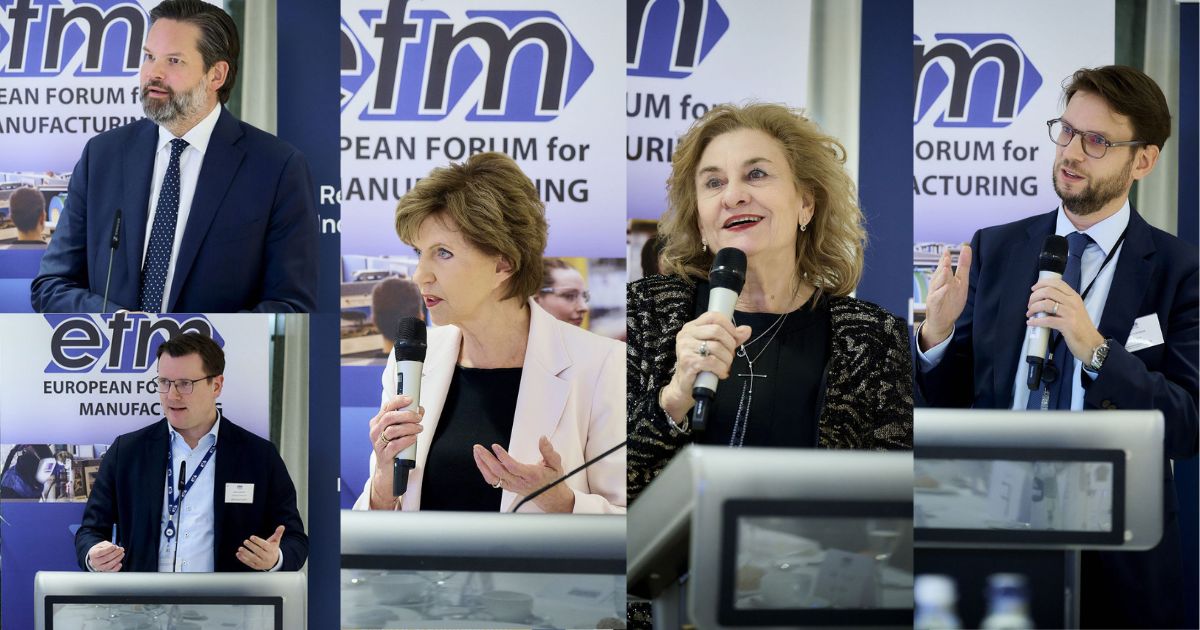
This excellent analogy from one of our members showed why simplifying the Data Act and the European Union's General Data Protection Regulation (GDPR) is particularly important for technology manufacturers, at a European Forum for Manufacturing dinner at the European Parliament, “Europe's Industrial AI Moment: Simplifying Data Rules for Advanced Manufacturing,” hosted by Orgalim.
We brought policymakers and industry leaders together to discuss how EU data rules can support industrial innovation, rather than constrain it.
Europe can further strengthen its position in industrial artificial intelligence (AI) and build on its strong manufacturing base and world-leading industrial know-how. But realising this potential will depend, among other things, on whether companies can effectively access and use the data generated across their operations.
In his opening remarks, Daniel Wennick, Policy Director at Orgalim, highlighted the enormous potential of industrial AI for Europe's manufacturing industries.
From optimising production processes and energy use to improving quality control and enabling predictive maintenance, AI offers concrete opportunities to strengthen industrial productivity and competitiveness.
As European Commission President Ursula von der Leyen highlighted in her 2026 State of the Union address, advanced manufacturing is among the sectors where industrial AI has the greatest potential, supported by the availability of high-quality industrial data.
However, European companies need the right regulatory conditions to make effective use of these data. While legislation such as the GDPR and the Data Act pursues important objectives, their cumulative complexity creates significant challenges for manufacturers. Industrial datasets generated by machines can, for example, fall within the scope of GDPR requirements because they contain information indirectly linked to employees. Meanwhile, the implementation of the Data Act raises concerns around existing contractual arrangements, collaboration with R&D partners and the protection of commercially sensitive information and trade secrets.
Orgalim believes the European Commission's Digital Omnibus proposals are an important first step towards simplifying Europe's digital regulatory framework, but the objective should be but to ensure that companies can use data to innovate - while protecting personal information, intellectual property, and commercially sensitive know-how.
The discussions at the European Parliament highlighted the importance of ensuring that Europe's regulatory framework supports rather than constrains industrial innovation. With the Digital Omnibus, we have an opportunity to address practical implementation challenges, reduce unnecessary complexity, and create better conditions for the responsible use of industrial data and the deployment of AI.
Europe already has a strong industrial foundation, and the data needed to develop competitive industrial AI solutions: the priority now is to ensure that companies have the regulatory clarity and flexibility to turn this potential into innovation, investment, and growth.