The research project ends: then our real challenge starts
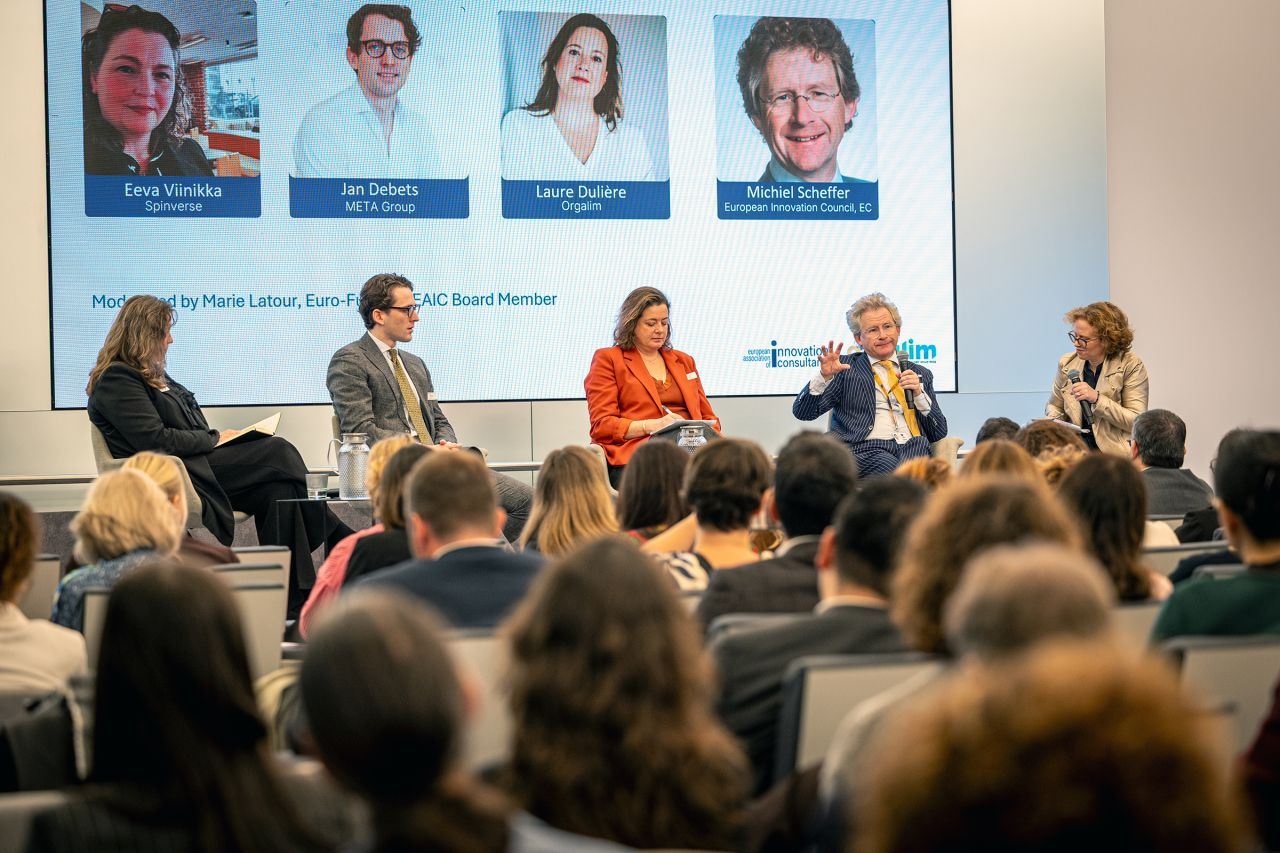
3 November: This was a key takeaway during a debate on the future of research and innovation funding at the EAIC Summit's Competitive by Design event in Brussels.
As negotiations on the next Multiannual Financial Framework gather momentum, another question might prove most important of all: how can Europe ensure that excellent research translates into industrial competitiveness?
In the proposed 2028–2034 Multiannual Financial Framework (MFF), Horizon Europe’ proposal includes a budget of €175 billion. One part of Horizon Europe (Pillar II) is dedicated to supporting collaborative research projects.
For Europe's technology industries, collaborative research remains one of our greatest strengths. Through Pillar II, companies, universities and research organisations work together across borders to develop technologies that no single actor could create alone. The model has helped build scientific excellence, technological leadership and industrial cooperation across the continent.
The challenge is that research alone does not create competitiveness.. The real test is whether the knowledge resulting from a project can attract investment, support industrial development and ultimately reach the market.
Too often, Europe excels at generating results but struggles to provide a clear pathway towards deployment.
Laure Dulière, Policy Manager of Energy, Climate and Innovation, outlined three priorities that should shape the future relationship between collaborative research and the proposed European Competitiveness Fund.
1. Who shapes research priorities.
Industrial relevance cannot simply be added at the end of a project through impact requirements. If research programmes are expected to strengthen competitiveness, then companies must play a meaningful role in defining the challenges, roadmaps and technological priorities from the outset. Strategic direction remains important, but Europe must also preserve space for bottom-up innovation and emerging technologies that may not fit neatly into predefined political priorities.
2. Which technologies we prioritise
Competitiveness policies often gravitate towards individual sectors. Yet some of the technologies that matter most are those that cut across the entire economy. Advanced manufacturing, industrial automation and robotics support innovation in clean technologies, mobility, healthcare and countless other applications. Their value lies precisely in the fact that they enable progress across multiple sectors at the same time. Europe should therefore be careful not to organise future programmes into policy silos that fail to recognise these wider benefits.
3. What happens after the collaborative research project ends
The partnerships that drive collaborative research are not always best placed to commercialise its outcomes. Nor should they be expected to do so. However, if Europe is serious about competitiveness, promising technologies need a credible route towards validation, industrial uptake and scale-up. This is where innovation and industrial ecosystems should be ready to take over.
Research funding should not exist in a vacuum. We want successful projects to progress through developmental stages more seamlessly.
Ultimately, this is yet another question of complexity.
That is also why Orgalim continues to call for a strong and well-funded successor to Horizon Europe. The federation has advocated for a €200 billion budget, with 60% dedicated to Pillar II, arguing that collaborative research remains the foundation upon which future industrial competitiveness is built. Research excellence and competitiveness should not be treated as competing objectives. Europe's long-term competitiveness will depend on its ability to connect them more effectively.