Advanced is never finished
An essay by Velatia
As a young man I would visit the Ormazabal factory. It felt advanced and progressive. They used new techniques, smart systems and clever engineers.
When my daughters visit that same factory today, they see advanced technologies, intelligent systems and talented engineers. And yet, the systems they see are not the ones I saw.
That difference tells us something important. However automated or digitised we become, human curiosity does not stand still.
Manufacturers are engineers and engineers ask: what’s next? Progress does not finished.
That brings us to Europe’s manufacturing challenge.
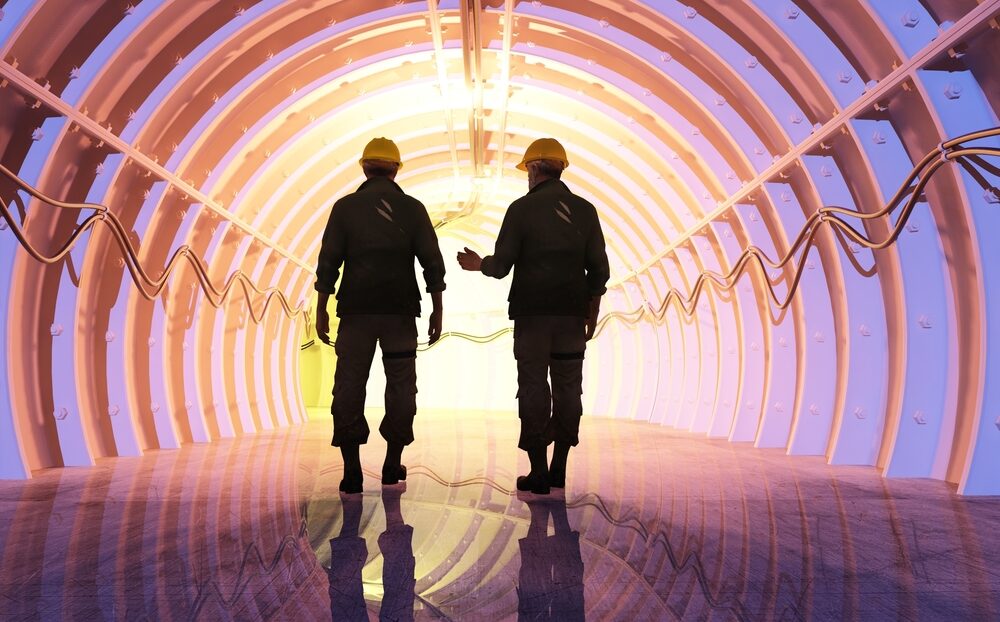
The good news is clear. European companies are global leaders in advanced manufacturing. We excel in digital systems, robotics, automation, power electronics and circular production methods. Europe is exceptionally strong at developing new technologies.
But too often, that is where the story ends. European start-ups and industrial technologies are born here, prove their value here, but are scaled elsewhere. Factories of the future are built outside Europe. Value creation, industrial capacity and resilience leak away.
The problem is not research, which we do extremely well. The problem is deployment and retention.
There has been much recent talk about a trade bazooka. I propose that we need something different: a Deployment Bazooka. And we have just the thing that could become worthy of this title: The European Competitiveness Fund.
This must become a true launch pad for European manufacturing. Not a fragmented funding tool or a niche programme, but a strategic instrument designed to keep technologies, companies and production capacity in Europe.
This requires three concrete shifts.
Scale and simplicity
The Competitiveness Fund must be large enough and simple enough to matter. Today, many industrial companies find EU funding slow, complex and unpredictable. If we want firms to build and scale in Europe, financing must be faster, clearer and aligned with industrial timelines.
Real industry involvement
Those working in factories and supply chains know where investment delivers results. Whether in automation, electrification, digital twins, advanced materials or power electronics, industry must help set priorities so funding supports deployment at scale, not just promising prototypes.
Mobilisation of private capital
Public funding should not replace private investment, but de-risk it. A strong, predictable Competitiveness Fund would give long-term investors the confidence to commit capital and help keep European technologies European.
Horizon Europe also plays a crucial role. It should continue to push the technological frontier, but with a much stronger bridge to industrial deployment. Advanced manufacturing, AI-enabled production, clean industrial processes and power electronics should be treated as strategic priorities.
Funding along is not enough however. Europe also needs better coordination of national incentives, fewer distortions across the Single Market and clearer signals about where we want to build capacity, whether in clean technologies, defence, mobility or energy systems.
That is why urgency matters. Manufacturing is not just another industry. It is the backbone that turns innovation into competitiveness, resilience and strategic autonomy.
Forward-looking policy is essential if we want the next generation to go further than we did. That was my father’s hope for me, and it is my hope for those who come after me.
This is not an easy moment to look ahead. Europe’s industrial future is being shaped in a more unstable world. Strategic competition is intensifying. Trade is increasingly weaponised. Access to critical technologies and materials has become a question of security as much as efficiency.
Advanced manufacturing, therefore, is not only about cost or productivity. It is about Europe’s ability to act, not just to react.
If Europe wants to remain advanced, it must move faster from invention to deployment, from start-up to scale-up and from laboratory to factory floor.
It is time to stop losing what we create and deploy our a Deployment Bazooka.
About the author
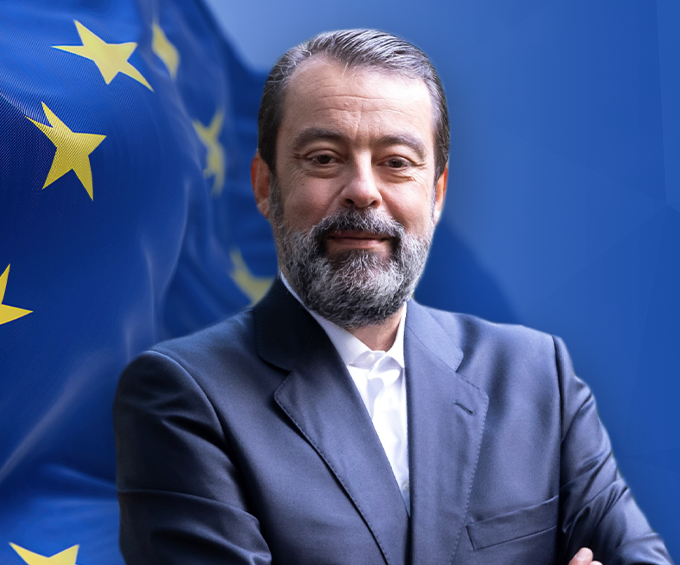
Javier Ormazabal, President, Orgalim and CEO, Velatia
Javier Ormazabal is President of Orgalim and President and CEO of Velatia. Educated in Economics and Business at the University of the Basque Country, with further studies at London Business School and IESE, he built his career within the Velatia family business, leading its international expansion and becoming president in 2012. He has held prominent leadership roles in major business and innovation organizations, including Aefame, the Basque Business Circle, and Tecnalia Research and Innovation, and has served on advisory and governing boards at regional, national, and European levels. His professional achievements have been widely recognized, including honors from the Basque Government, ESEUNE Business School, and the University of the Basque Country.