July 7, 2026
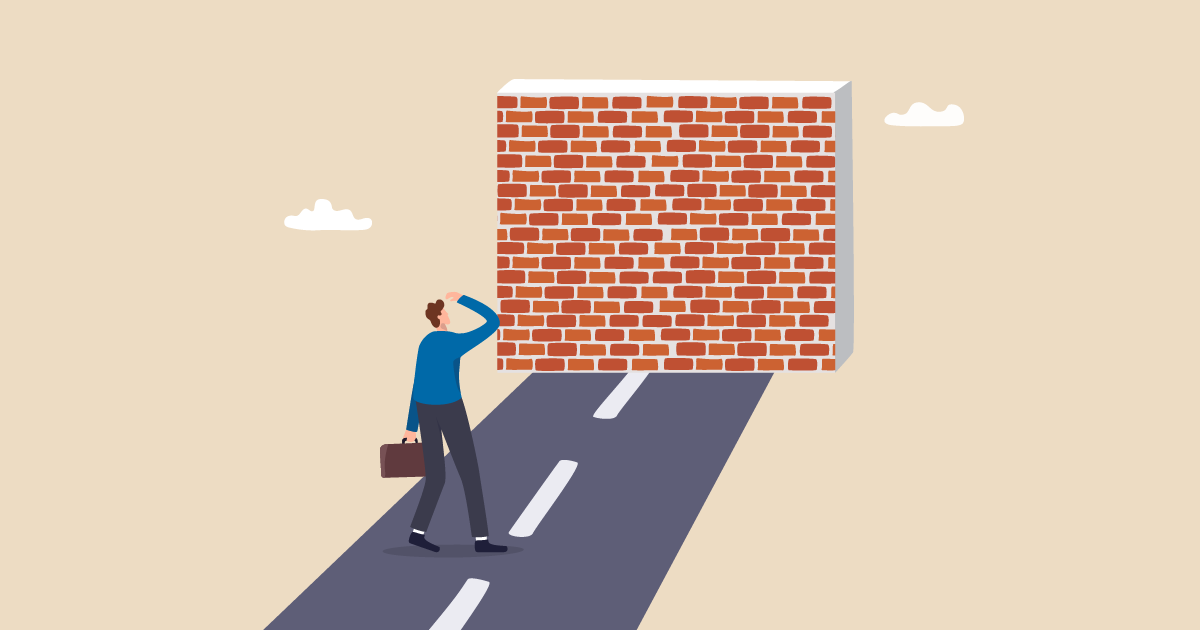
Europe’s industrial strategy GOES nowhere
On 1 July, new import quotas and tariffs on steel entered into force. The measures are intended to further protect European steel producers from persistent global overcapacity and unfair competition from non-EU producers. The theory being that steel is a strategically important industry, and that production must remain in Europe.
Yet the latest measures expose a much bigger question that the European Union must answer, as it tries to build a coherent industrial strategy. Namely, what counts as strategic?
Industrial policy requires choices. Europe cannot protect every single industry equally. But the choices must be guided by a coherent long-term strategy, rather than a series of ad hoc interventions.
Today, that coherence is increasingly difficult to see.
Resilience has come to mean one thing above all else: protecting selected upstream industries. This is often at the expense of downstream manufacturers who produce the technologies Europe says it wants to champion.
We are facing an industrial policy that strengthens the weak but weakens the strong.
The latest example is Grain-Oriented Electrical Steel (GOES).
Earlier this year, the European Commission launched a safeguard investigation into imports of GOES, opening the possibility of new trade restrictions, despite European production already falling well short of rising domestic demand.
At first glance, GOES appears to be just another technical trade case. In reality, it exposes a blatant and much broader inconsistency in Europe's industrial thinking.
GOES is the specialised electrical steel that allows transformers and large generators to operate efficiently by directing magnetic fields with minimal energy loss.
Without GOES, there are no transformers. Without transformers, there is no expansion of Europe's electricity grid. And without grid expansion, there is no large-scale electrification of the economy – needed to free Europe from its costly and longstanding dependencies on imported fossil fuels.
That makes the timing of the investigation particularly odd.
This week, European Commission is considering trade measures that will make one of electrification's most essential raw materials significantly more expensive and less accessible to European transformer manufacturers.
Next week, it is expected to publish its Electrification Action Plan: a roadmap intended to accelerate Europe's transition towards an electrified economy.
Taken together, both measures are in a complete contradiction, at a moment when Europe desperately needs strategic coherence.
The steel industry's concerns are real; we acknowledge that. European producers face high energy costs, intense international competition and the consequences of global overcapacity. Supporting European manufacturing capacity matters.
However, strategic thinking requires looking beyond the first link in the value chain. This seems to be something which the European Commission ardently refuses to do. Europe cannot afford to build a one-sided industrial strategy that shields selected upstream sectors from competition while expecting the rest of the value chain to absorb ever-rising costs, pay the bill, and continue producing.
No region can electrify with raw steel alone. It electrifies through transformers, generators, electric motors, and the countless technologies designed and manufactured by Europe's downstream industries. These are the companies that turn raw materials like steel into innovative cleantech products that make electrification possible.
At the same time, those manufacturers are being driven into the ground as supply of critical inputs like GOES becomes more expensive and uncertain. As a result, Europe's wider strategic ambitions will become harder to achieve.
This reflects a broader challenge in European industrial policy. The old industrial policy simply focused on protecting production capacity. The new industrial policy must focus on enabling innovation, strengthening cleantech production and supporting the industries that will define Europe's future competitiveness.
That requires a proper strategy that informs long-term thinking and sound tactical decisions.
It also requires recognising that not every sector is able to contribute equally to our long-term objectives. If Europe is serious about electrification, clean technology and strategic autonomy, then the industries enabling those goals must be recognised as strategic.
The manufacturers of transformers is one such industry. Europe's transformer manufacturers employ tens of thousands of people across dozens of production sites, supplying the equipment needed to modernise and expand Europe's electricity grid. Without their products, electrification simply can and will not happen.
The irony is difficult to ignore.
GOES has already benefited from trade protection since 2015, yet European production still cannot satisfy European demand. The product was excluded from previous safeguard measures precisely because of that structural shortage. If more than a decade of protection has not solved the underlying competitiveness challenge, it is reasonable to ask whether additional trade restrictions are really the answer, or whether they simply transfer costs onto the industries Europe most needs to succeed.
The Commission rightly argues that Europe cannot rely excessively on volatile international supply chains. But if resilience is defined solely through the lens of steel production, Europe risks weakening the very manufacturers that produce the technologies essential for electrification, decarbonisation, and energy independence.
Ultimately, industrial strategy is about making coherent choices. What does Europe really consider strategic?
If the answer is simply steel, then Europe risks protecting the input while undermining the industries that transform it into the technologies needed for the green transition to succeed.
If the answer is Europe's ability to electrify, reduce energy dependencies and compete globally, then strategic thinking must stretch beyond raw materials and duly consider the downstream manufacturers that make those ambitions possible.
Europe undoubtedly needs a competitive steel industry. But it also needs affordable access to the specialised materials that power its clean technology industries to deliver Europe’s much broader strategic ambitions for electrification and greater energy security.
Otherwise, in trying to strengthen one part of the industrial chain, Europe risks weakening the very industries that will build its future.
