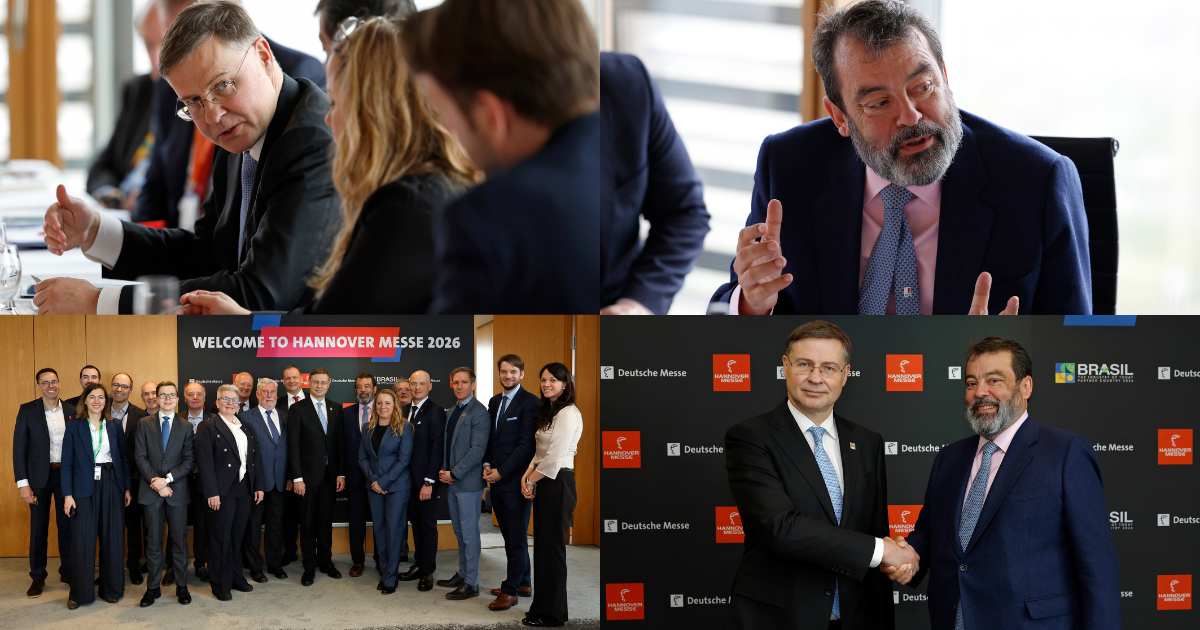
A simple agenda with some clear asks: Orgalim Council Roundtable with Commissioner Dombrovskis
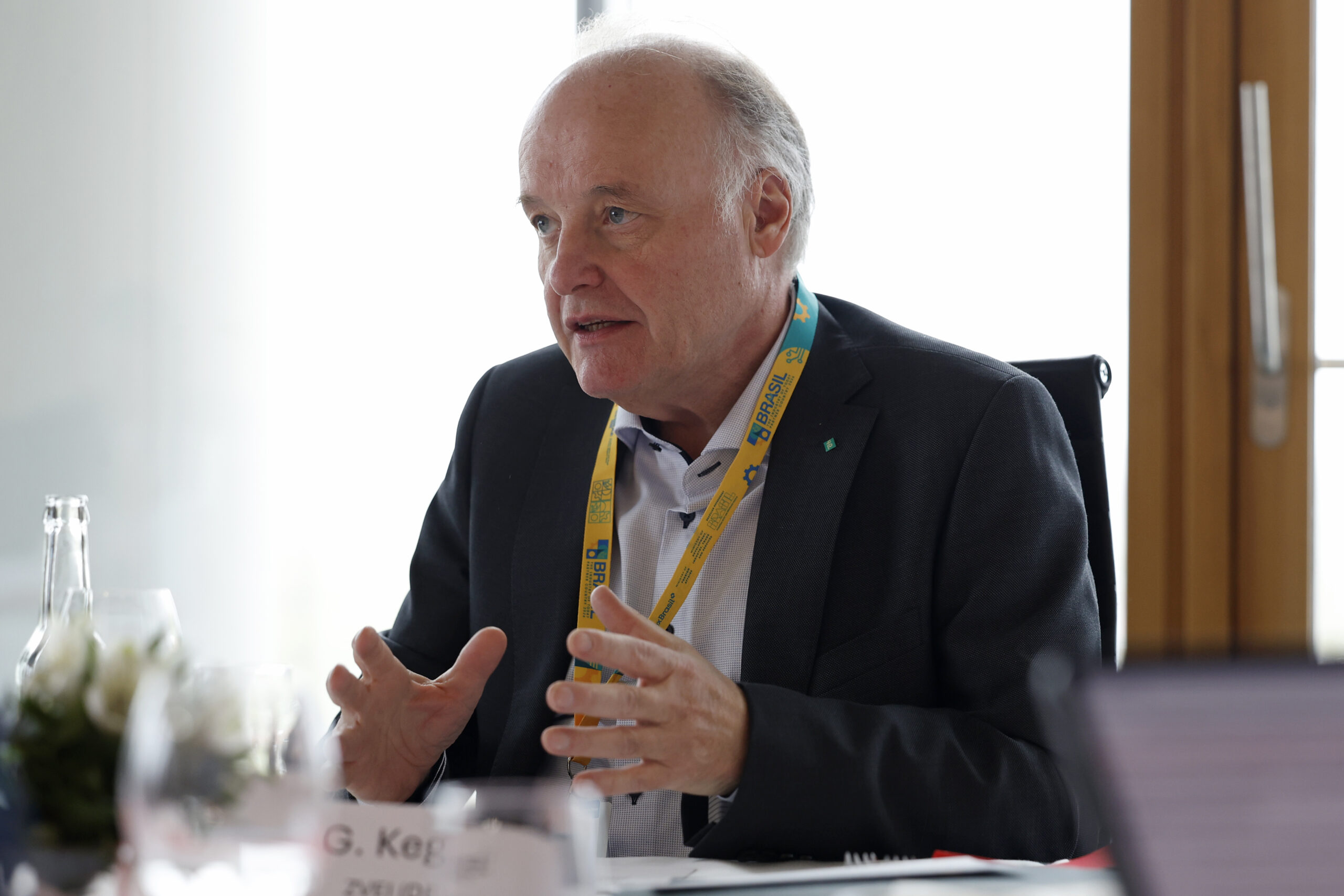
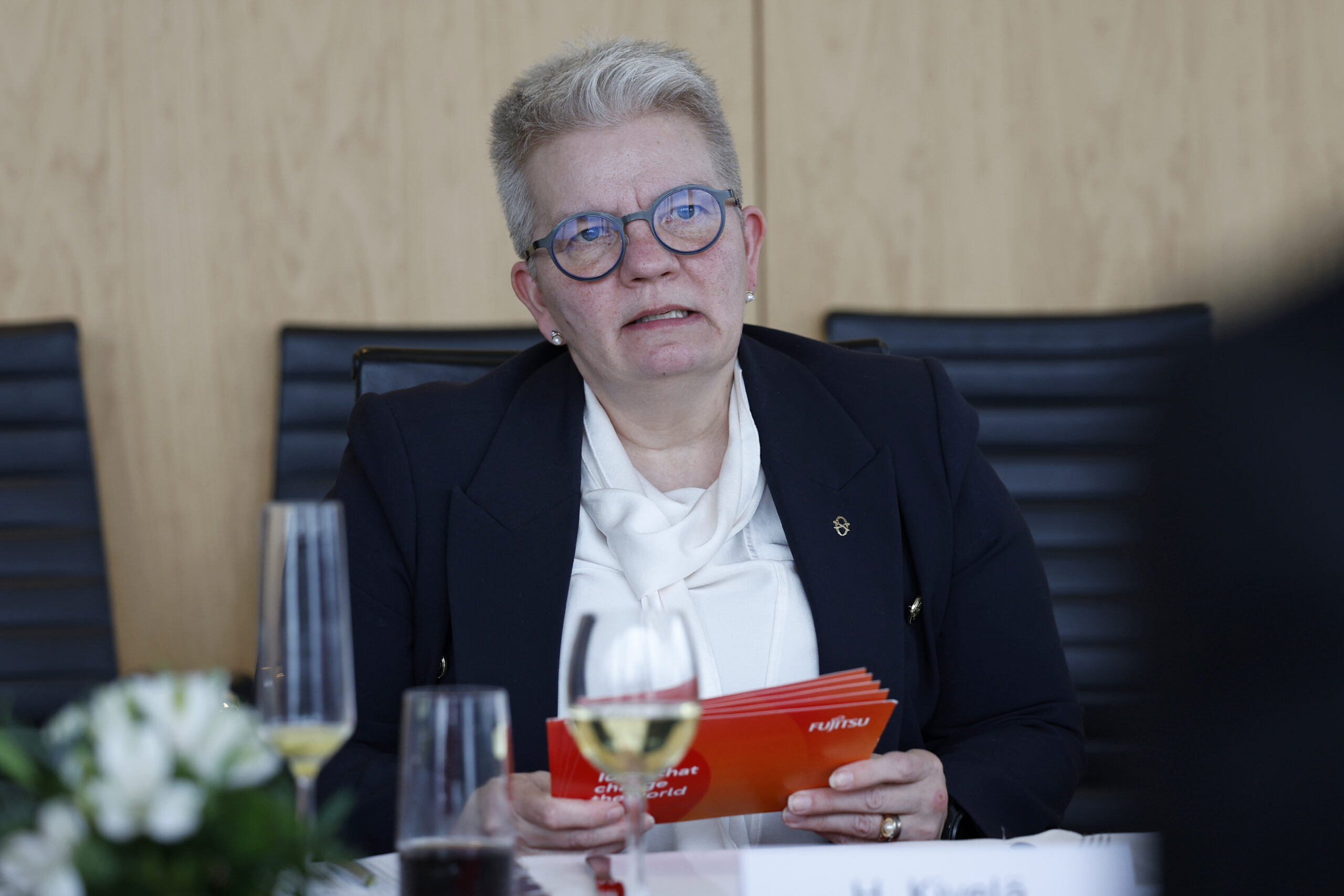
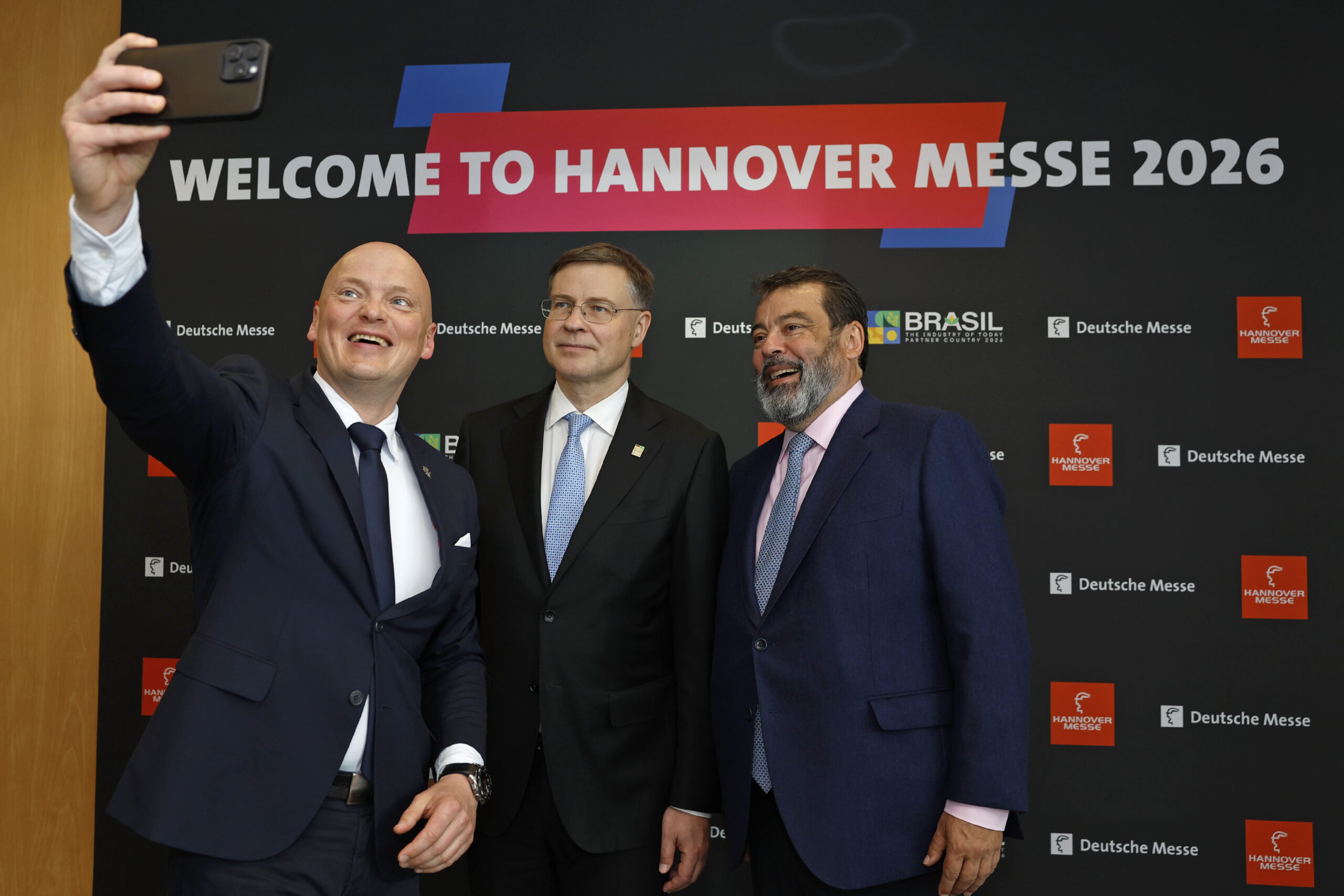
Monday 20 April: European Commissioner Valdis Dombrovskis, responsible for Economy, Productivity, Simplification and Implementation in the European Union, joined members of the Orgalim Council for a high-level roundtable at Hannover Messe.
The exchange focused on the progress achieved so far through the EU simplification agenda, but also the challenges that remain for European technology industries.
Many of the challenges the European technology sector is facing come from overlapping or - in some cases - contradictory regulatory and compliance requirements. For example, during the meeting, Orgalim's members cited legislation ranging from the Cyber Resilience Act (CRA) and Cyber Security, the Industrial Accelerator Act (IAA), the AI Act, the European Product Act (EPA) the Data Act, CBAM, Europe's chemical legislation including PFAS, all of which and more typically applies to the companies within Orhalim's membership.
However, Commissioner Dombrovskis shared that on Tuesday, 28 April, he will present a 'Communication on better regulation and enforcement.' This will include how changes to the process of drafting legislation can help ensure it can be implemented in practice, improving impact assessments, and providing a better pathway for dealing with urgent situations.
In addition, the Communication will contain an action plan on 'regulatory cleaning' which will identify several areas for strategic action in 2026 and 2027. It will foster the coherence and consistency across EU rules, reducing regulatory fragmentation and removing duplication and inconsistencies to reduce unnecessary costs.
Orgalim Director General Ulrich Adam noted that the speed of simplification efforts by the European Commission - with ten Omnibuses proposed and three approved already - has been remarkable.
Europe has been brave enough to do something fast. But also prudent enough to take key stakeholders along.
The Roundtable focused on three policy areas - the functioning of the internal market; environmental sustainability legislation; and digital regulation - and drew upon the findings of Orgalim’s newly published Simplification Report (April 2026).
This new report concludes that although recent EU simplification initiatives deliver meaningful cost savings, these are outweighed by the cumulative regulatory costs from legislation introduced in both the last and the current legislative cycle. The report underscores the need for a more structural shift in the EU regulatory approach and is a successor to Orgalim's report from April 2025, Time to act: Reducing the regulatory burden on Europe's technology industries.
Our companies invest heavily in innovation and in Europe. But to operate well, we need a regulatory environment that is predictable, proportionate and workable in practice.
Many of Orgalim's members shared specific business case examples that demonstrate how European companies are disadvantaged at times, simply because the speed of innovation far outpaces the European regulatory framework.
The leaders reinforced their support for regulation that is world-leading in terms of safety or quality control. The concerns focused instead on the hurdles that cumbersome administrative requirements place on businesses that could be avoided or completely more efficiently. They highlighted that this must be addressed if the European Union wants to achieve competitiveness.
We thank European Commissioner Valdis Dombrovskis for his candid insights into the current focus of the Commission and the aims of what they intend to achieve within this legislative cycle. In addition to the upcoming initiatives to be shared next week, this includes a 25% reduction in regulatory burden for all companies but a specific 35% reduction target for small and medium enterprises (SMEs) to reflect the disproportionately higher burden they experience and support innovation among smaller business operators. This is relevant to Orgalim and its membership, which is composed of 98% SMEs.
The Orgalim Council brings together the presidents of Orgalim’s national member associations and additional industry leaders.
In attendance at the meeting was:
Orgalim Council
Mr Laurent Bataille, President of Schneider Electric Europe; Member of the Executive Committee of Schneider Electric (France)
Mr Thilo Brodtmann, Executive Director of VDMA (Germany)
Mr Jerome de Chassey, President, Smiths Detection
Mr Ivars Eniņš, Chairman of the Council of MASOC (Latvia)
Mr Theo Henrar, President of FME (Netherlands)
Mr Gunther Kegel, President of ZVEI (Germany)
Ms Hanna Kivelä, Vice-Chair of the Board of TIF (Finland) & CEO, Fujitsu (Finland)
Ms Dagmar Mundani, Head of M&A and Government Engagement, Siemens (Germany)
Mr Javier Ormazabal Echevarria, President of Orgalim; CEO, Velatia (Spain)
Mr Tomas Prūsas, President of LINPRA (Lithuania)
Mr Justin Rose, President, Worldwide Agriculture and Turf Division, John Deere (Germany)
Mr Wolfgang Weber, Chairman of the ZVEI Management Board (Germany)
European Commission
European Commissioner Valdis Dombrovskis
Mr Arnolds Eizensmits, Policy Assistant, Cabinet of Commissioner Valdis Dombrovskis
Ms Gabriela Tschirkova, Member of the Cabinet of Commissioner Valdis Dombrovskis
Orgalim
Mr Guillermo Amann, Senior Adviser to the President
Mr Daniel Wennick, Policy Director
Ms Sarah Kempe, Director for Communications
Mr Francesco Guerzoni, Manager, Digital and Legal